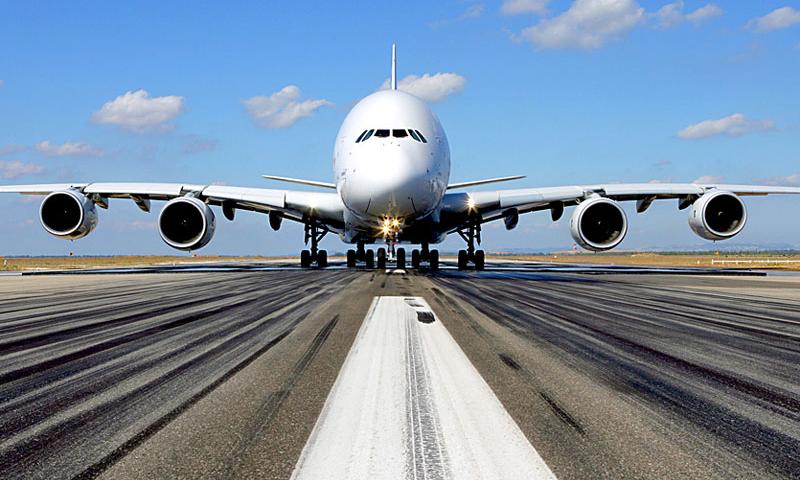



To say that the most important component of an aircraft is its wings is self-evident; they are so important that all aircraft manufacturers reserve wing manufacture for themselves rather than hiring subcontractors to do it.
Of all the technological innovations that the C series contains, its wings entirely made of composite materials are unique in the aviation industry. The concept of the wings uses a new RTI (standing for Resin Transfer Infusion) process. This process is patented and is the exclusive property of Bombardier.
As the manufacture of the C Series’ wings involves several new processes with new materials, Bombardier took the time to develop a rigorous validation method. Indeed this method is so well designed and documented that regulatory organisation such as Transport Canada, the FAA and the European EASA use it as a certification standard for airliners all composite wings, which means that Bombardier really has set the standard.

Last May, several weeks after I published that the wings of the C Series were unbreakable, Bombardier confirmed this information in a video about updates to the C Series. Then less than a month before the Paris Air Show President Bombardier Commercial Aircraft Fred Cromer mentioned the possibility that the CS300’s wings could be used on an eventual CS500. Coincidentally this was around the same time that discussions between Airbus and Bombardier would have begun.
I am one of those who think that Airbus has no need for the C Series in its fleet of aircraft and I have always doubted the true intentions of this industrial giant with regards to Bombardier. It is only after having discussed the C Series’ wings with employees of Bombardier that the idea came to me that Airbus was interested in the wings. Thinking about it, this makes sense seeing as in order to develop similar technology one has to wait at least 10 years and success is not always guaranteed. Airbus could always poach some of Bombardier’s engineers but nonetheless it would have to find a recipe which is slightly different from Bombardier’s in order to not be accused of plagiarism.

This marriage didn’t take place because the « dowry » demanded by Airbus was too high. If Airbus had bought 60% of rights to the C Series as was demanded it would have meant that it would have taken control of the innovation that came with it. For example: to save the Global 7000 Bombardier simply replaced its poor performing wings with those of the C Series. This would have meant that Airbus would have been in the position to decide whether Bombardier would have had to pay a fee to the consortium that owns the C Series (unless of course this wasn’t already part on the “marriage contract”). But for anything that was not in the contract, law firm would have been call to sort it out, this agreement between the two companies would have probably been the biggest goldmines that law firms from Quebec have ever seen. This means that revenues from the C Series would have mainly been used to line the pockets of lawyers instead of in research and development. Finally I am somewhat content that this agreement was never reached.