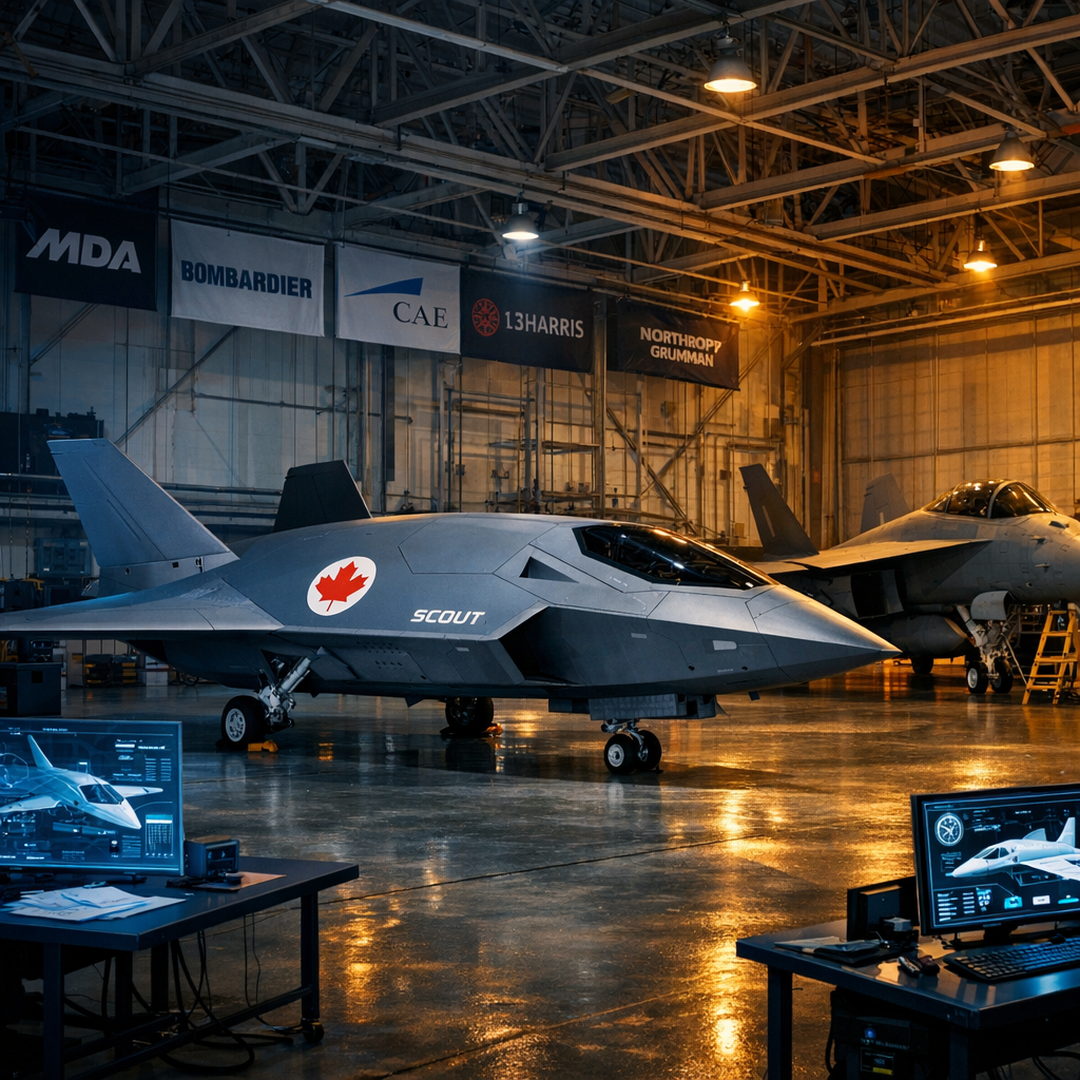


Dominion Dynamics has announced the formation of a major Canadian consortium dedicated to the design of Scout, described as the very first autonomous collaborative platform conceived and developed in Canada. This structuring initiative brings together several key players in the country's aerospace and defence industry, with the aim of equipping the Canadian Armed Forces with a sovereign capability in next-generation uncrewed aerial systems.
The Scout project is part of the new generation of collaborative aircraft (Collaborative Combat Aircraft, or CCA), an emerging category of autonomous vehicles designed to operate alongside piloted aircraft in coordinated formations. These platforms promise to profoundly transform how air missions will be conducted over the coming decades by extending the reach, stealth and survivability of human crews.
A pan-Canadian consortium
The consortium brings together a coalition of technology companies, avionics system suppliers, industrial integrators and research centres spread across the country. The objective is to mobilize Canadian expertise in artificial intelligence, autonomy, advanced manufacturing, sensors and secure communications, in order to deliver a fully sovereign platform. Quebec, a major hub of the North American aerospace industry, is expected to play a central role in the design, assembly and validation of the system.
Beyond its technological dimension, this project also represents a strategic opportunity for Canada to strengthen its defence industrial base, create highly skilled jobs and consolidate its export capabilities toward allied markets that are already turning to collaborative autonomous systems.
A response to future operational needs
Scout aims to provide the Canadian Armed Forces with a tool capable of operating in support of crewed fighter aircraft, particularly in the context of the ongoing renewal of the tactical air fleet. The platform will be designed to carry out advanced reconnaissance missions, suppression of enemy defences, electronic warfare, jamming and precision strike, all while reducing the risk to human pilots.
The platform is being designed from the outset using a modular and scalable approach, allowing for the rapid integration of new payloads, sensors and algorithms as threats evolve. This open design philosophy, now essential in the field, also fosters collaboration among industrial partners and accelerates time to service.
« The creation of this consortium marks a historic milestone for Canadian technological sovereignty. Scout demonstrates that our country has the expertise, talent and industrial determination needed to design, build and operate its own world-class autonomous platforms », a spokesperson for Dominion Dynamics stated.
Major spin-offs for aerospace employment
The Scout program is expected to generate a significant volume of specialized jobs, particularly in the fields of software engineering, artificial intelligence, robotics, aerostructures, flight testing, cybersecurity and complex systems integration. Workers in the Quebec aerospace sector, recognized for their expertise, will be called upon to play a leading role in the program's delivery.
The consortium partners also intend to work closely with universities, colleges and vocational training centres in order to develop the necessary talent pool. Internships, applied research programs and corporate training partnerships are expected over the coming months.
Next steps
In the coming months, the consortium will finalize program governance, define detailed technical requirements and set up the first integrated engineering teams. A more detailed schedule, including prototyping stages, ground testing and first flight trials, will be communicated at a later date.
To follow all employment opportunities related to this program and to the entire Quebec aerospace industry, visit aeroemploi.ca regularly, the leading career portal for aerospace professionals in Quebec.